Grades 9–12
Stabile sculpture, inspired by Alexander Calder
- Grade band:
- Grades 9–12
- Tool:
- Craft knife. This is a 1/16" sheet, so scissors will not cut it.
- Sheet:
- 20" × 30" sheet, 1/16" thick. One sheet serves two students.
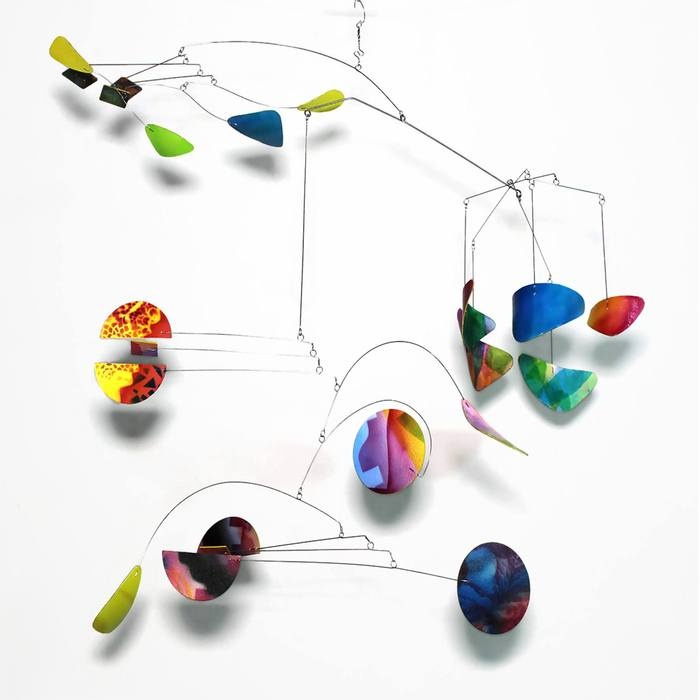
Alexander Calder is best known for his kinetic mobiles. They were only part of his work. He also made stationary pieces he called stabiles. Students study that body of work, then make a stabile of their own.
Calder kept color secondary to form. Black and white mattered most to him, and he thought red was the color most opposite them. Use that as a starting point for the palette.
The materials list is based on a class of 25 students.
Adapted from the lesson plan published by Blick Art Materials.
Steps
- Look at Calder. Study Calder’s stabiles and mobiles. The Calder Foundation is the lesson’s listed resource.
- Sketch. Each student sketches ideas for a stabile.
- Build a maquette. Make a three-dimensional maquette from heavy scrap board. It is the plan for the final piece.
- Cut the pieces. Cut the pieces from the Taskboard sheet with a craft knife.
- Glue to match the maquette. Glue the pieces together to match the maquette. Paper clips and rubber bands hold them while the glue sets.
- Sand. Sand with extra-fine sandpaper. Wear a particle mask when sanding.
- Paint. Paint with acrylics. Remember to paint the edges of the board, too.
- For a mobile and stabile hybrid, add copper wire and small pieces. Pierce the pieces with a nail or tack.
- For a high-gloss finish, coat the painted piece with flexible acrylic varnish.
What students learn
- How an artist’s body of work reaches beyond its best-known form
- How to plan a three-dimensional piece with a maquette before cutting the final material
- How color supports form instead of competing with it
Standards
- National Visual Arts Standard 1: Understanding and applying media, techniques, and processes
- National Visual Arts Standard 2: Using knowledge of structures and functions
- National Visual Arts Standard 5: Reflecting upon and assessing the characteristics and merits of their work
More lessons
Keep going
Grades 2–5
Crayon and glue cut-shape sculpture
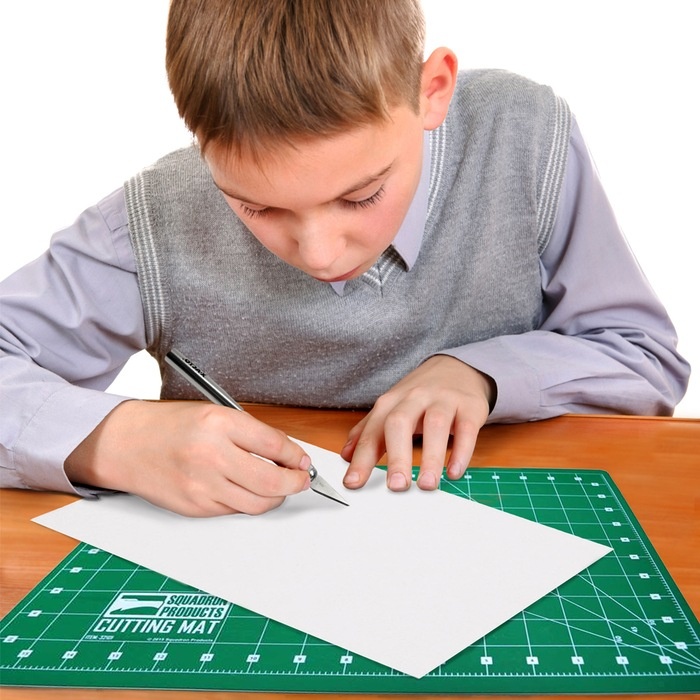
Students cut shapes with scissors, color them with crayons and waterproof pens, then glue a balanced design.
- Scissors
- 1/32" white Taskboard
Grades 5–6
Sound wave group sculpture
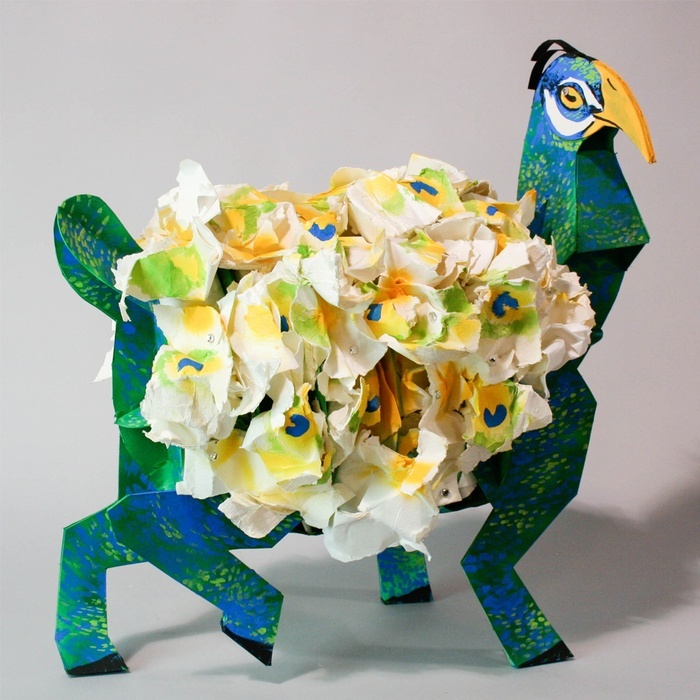
A class builds one shared sculpture from scissor-cut shapes. A piece like it was shown at the San Diego Museum of Art.
- Scissors
- 1/32" white Taskboard